










Friday 20th February, 2026
5-7 minute read
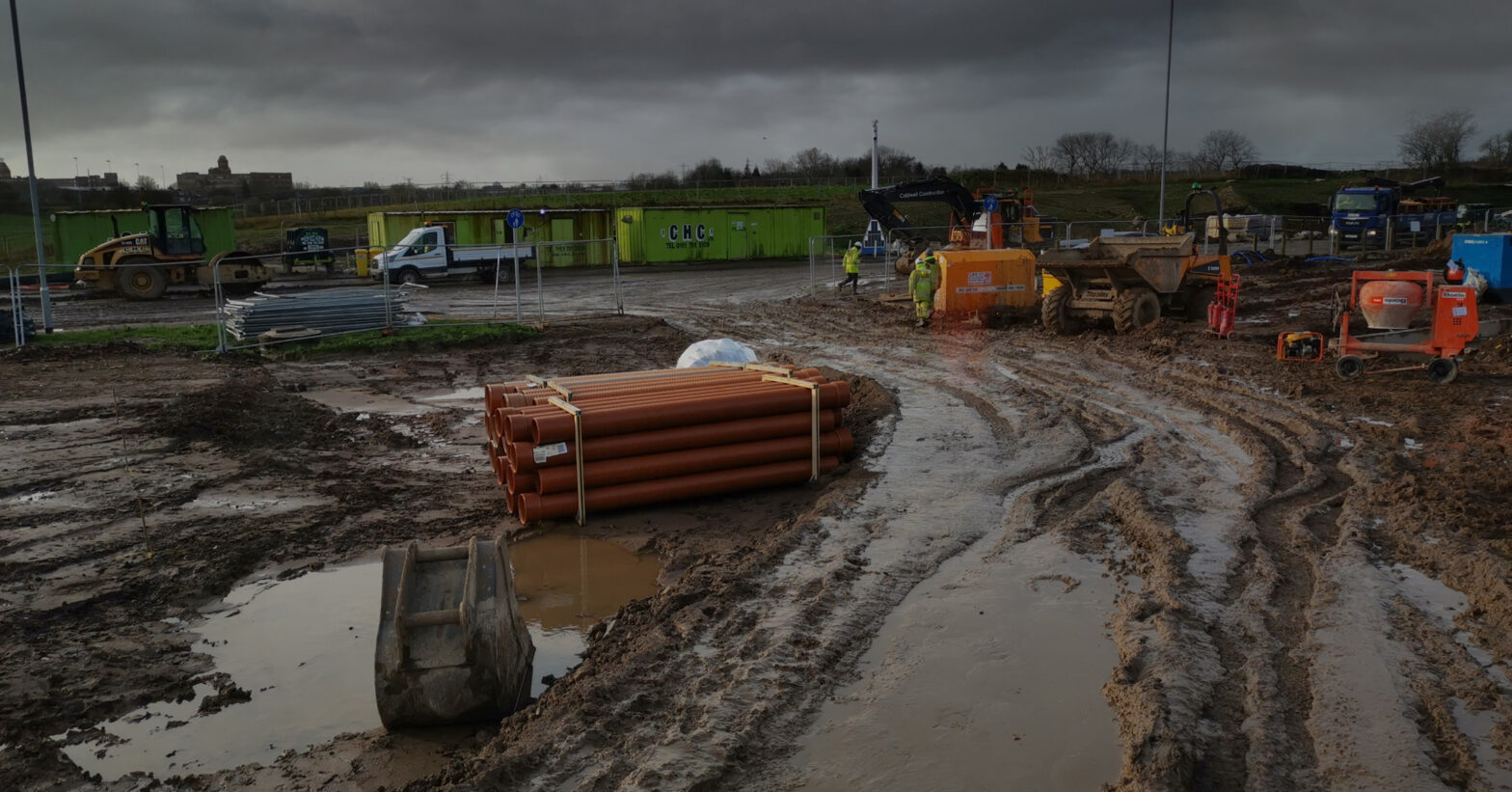
Grey skies. Saturated ground. Deepening puddles that were not there yesterday.
For UK construction sites, wet weather is not unusual. But when rainfall becomes prolonged, and ground conditions deteriorate, risk levels rise quickly. A waterlogged site is not simply uncomfortable. It is unpredictable, unstable and potentially dangerous.
With the UK experiencing increasingly volatile weather patterns, construction businesses must treat wet conditions as a foreseeable hazard rather than an inconvenience.
The 2024/2025 UK Safety Landscape
According to the Health and Safety Executive, 124 workers lost their lives in work-related incidents across Great Britain between April 2024 and March 2025. The construction sector accounted for 35 of those fatalities, once again making it the highest risk industry for workplace deaths.
Falls from height remain the leading cause of fatal injury in construction. When you introduce rain, mud, slippery access routes and unstable surfaces into that equation, the danger increases significantly.
Non-fatal injuries remain a serious concern, too. Thousands of construction workers continue to suffer reportable injuries each year, with slips, trips and falls consistently among the top causes. On a waterlogged site, these risks are amplified.
The message is clear. Wet conditions do not create new hazards. They intensify existing ones.
Key Safety Risk Areas on Waterlogged Sites
1. Slips, Trips and Falls
Water transforms site surfaces almost instantly.
Hard ground becomes slick. Mud forms rapidly around access routes. Standing water conceals uneven ground, trailing cables and debris. Scaffold boards and access platforms lose friction.
Even a minor slip can lead to broken bones, ligament damage, or a long-term absence from work. For businesses, this means project delays, lost productivity and increased insurance costs. For workers, it means pain, lost income, and potential long-term impact.
Preventative measures must include:
- Clear pedestrian segregation
- Temporary anti-slip matting where required
- Frequent housekeeping checks
- Proper drainage planning
- Slip-resistant, waterproof footwear suitable for construction terrain
Ground conditions should be reassessed daily during sustained rainfall.
2. Falls From Height in Wet Conditions
Construction’s most serious hazard becomes even more dangerous when surfaces are wet.
Ladders, scaffold platforms, steel beams and roofing materials all lose grip in the rain. Gloves may become saturated, reducing hand friction. Workers climbing access ladders can slip if their boots are caked in mud.
Edge protection and fall arrest systems must remain uncompromised by weather. Harness inspections should include checks for water damage and wear. Access ladders should be cleaned regularly to prevent mud buildup.
If surfaces cannot be made safe, work at height should be reassessed and, if necessary, postponed.
3. Excavation and Ground Stability
Waterlogged soil is unstable soil.
Rain saturates trench walls, increasing the risk of collapse. Excavations that were safe in dry conditions may become hazardous within hours of heavy rainfall. Ground bearing capacity reduces, affecting plant stability and temporary structures.
After significant rain, excavations must be inspected before work resumes. Pumping out excess water is only part of the solution. The structural integrity of trench walls and support systems must be reassessed.
Ignoring this risk can lead to catastrophic consequences.
4. Vehicle and Plant Movement
Mud reduces tyre traction. Braking distances increase. Heavy plant can sink into saturated ground, creating instability.
Site traffic routes that were suitable in dry conditions may no longer be safe in wet conditions. Rutted mud tracks increase rollover risk for dumpers and telehandlers. Visibility from cabs may be reduced by rain, mist, and spray.
Traffic management plans should be flexible enough to adapt to weather conditions. This may include:
- Adjusting vehicle routes
- Reducing speed limits
- Increasing banksman support
- Improving lighting during overcast conditions
Wet weather requires slower, more deliberate movement across the site.
5. Reduced Visibility and Human Interaction
Poor weather reduces visibility for everyone. Workers wearing darker waterproofs may become less visible against grey skies and muddy backdrops.
High visibility clothing must remain compliant and visible even when layered with waterproof jackets. Reflective strips should not be obscured or heavily soiled.
Communication also becomes harder in heavy rain. Noise from rainfall on metal surfaces can reduce awareness of reversing alarms or verbal warnings. Teams should be clearly briefed during toolbox talks about increased vigilance in wet conditions.
6. Electrical Safety Risks
Water increases conductivity.
Temporary site electrics are particularly vulnerable during prolonged rainfall. Extension leads left on the ground, damaged cable insulation or poorly protected lighting systems can create serious electric shock hazards.
Control measures should include:
- Elevating cables away from pooled water
- Using weather-rated equipment
- Routine inspection of temporary power supplies
- Ensuring Residual Current Devices are functioning correctly
Electrical risk assessments must reflect changing site conditions.
7. Manual Handling and Dropped Object Risks
Wet materials are heavier. Timber absorbs water. Steel becomes slippery.
Manual handling risks increase significantly in these conditions. Workers may overexert themselves or lose grip during lifts. Dropped objects become more likely when gloves lose traction.
Where tools are used at height, securing them with appropriate tethering systems can reduce the risk of falling objects. Solutions from brands such as GRIPPS are specifically designed to prevent dropped tool incidents, which remain a major concern in construction.
Grip matters. Control matters. Prevention matters.
8. Cold Stress and Fatigue
Wet clothing combined with wind chill accelerates fatigue. Workers may not immediately recognise the effect of prolonged cold exposure on concentration and reaction times.
Reduced alertness increases the likelihood of small errors. Small errors on construction sites can escalate quickly.
Layered clothing systems, waterproof outerwear and access to dry rest areas are essential, not optional. Maintaining warmth supports mental focus and physical coordination.
Planning for Prolonged Wet Weather
The UK climate means rain is inevitable. According to the Met Office, several recent years have ranked among the wettest on record in parts of the UK. Construction planning must account for this reality.
Forward-thinking companies incorporate wet-weather controls into:
- Site induction briefings
- Dynamic risk assessments
- PPE specifications
- Procurement decisions
- Traffic management strategies
Preparation reduces disruption. Proactive planning protects both people and productivity.
Leadership, Culture and Communication
The difference between a chaotic rainy day and a controlled one often comes down to leadership.
Supervisors should actively monitor changing ground conditions. Toolbox talks should address weather-specific hazards. Workers should feel confident reporting concerns about unstable areas or unsafe conditions without hesitation.
Safety culture is tested most during difficult conditions. Strong leadership ensures standards do not slip when the ground does.
Turning Rain Into a Managed Risk
Rain will not stop construction across the UK. But unmanaged risk can.
Waterlogged sites demand heightened awareness, smarter planning and appropriate protective equipment. By recognising how wet conditions amplify existing hazards, businesses can reduce incident rates, protect their workforce and maintain operational continuity.
A rainy day on site does not have to mean danger. With preparation, vigilance and the right safety measures in place, it means adapting well to the elements.
At Stronghold Global, we help construction teams stay protected, compliant, and prepared with safety solutions designed for real-world conditions.
Speak to our friendly and helpful team today and make sure your next rainy shift is a safe one.
📞 01793 484237
✉️ sales@strongholdglobal.com
🌐 www.strongholdglobal.com
Follow us for practical workplace safety advice and the latest updates on compliance standards.
