











Friday 13th November, 2026
7-10 minute read
Looking after your people goes beyond keeping them warm. When winter arrives, workplace safety conversations often turn to familiar topics: icy surfaces, freezing temperatures, suitable footwear and making sure everyone has the right protective clothing.
And rightly so. These are all important considerations when preparing for the colder months.
But what about everything else that comes with winter?
Shorter days, darker mornings, seasonal illnesses, demanding workloads, unpredictable weather and uncomfortable working conditions can all affect how people feel and perform throughout the working day.
Whether your team works on a construction site, in a busy warehouse, across multiple facilities or behind a desk, winter can introduce challenges that aren’t always immediately visible.
And the latest UK workplace statistics highlight why looking after employee wellbeing deserves just as much attention as physical safety.
According to the Health and Safety Executive (HSE), an estimated 1.9 million workers in Great Britain experienced work-related ill health during 2024/25, with work-related ill health and workplace injuries contributing to a combined 40.1 million working days lost.
Although these figures cover the entire year rather than winter specifically, they highlight the importance of taking a proactive approach to workplace health, safety and wellbeing.
At Stronghold Global, we believe protecting your workforce means looking at the bigger picture. It’s not just about the equipment people wear, but how comfortable, supported and prepared they feel while doing their jobs.
So, this winter, let’s look beyond the layers and explore how organisations can create healthier, safer and better-supported workplaces.
1. The winter blues: Why daylight and mental wellbeing matter
There’s something about leaving for work in the dark and returning home in the same darkness that can make the winter months feel particularly long and demanding.
With fewer daylight hours and less opportunity to spend time outdoors, the colder months can influence our daily routines, sleep patterns and general wellbeing.
For some people, seasonal changes can have a more significant effect.
The NHS recognises Seasonal Affective Disorder (SAD) as a type of depression that typically follows a seasonal pattern, often occurring during winter. Symptoms can include low mood, tiredness, changes in sleep patterns and difficulty concentrating.
Although not everyone experiences SAD, it’s an important reminder that seasonal wellbeing isn’t just about physical comfort.
The figures speak for themselves
According to the HSE’s 2024/25 statistics:
- 964,000 workers experienced work-related stress, depression or anxiety, resulting in an estimated 22.1 million working days lost.
- These conditions also accounted for 52% of all self-reported work-related ill health during the reporting period.
While these figures aren’t specific to winter, they demonstrate just how significant mental wellbeing is for employees and organisations across Great Britain.
What can employers do?
Supporting mental wellbeing doesn’t necessarily require major changes.
Encouraging employees to make the most of natural daylight, ensuring workspaces are appropriately lit and promoting regular breaks can all contribute to a more comfortable working environment.
Managers can also help by checking in with their teams, recognising changes in behaviour and creating opportunities for employees to raise concerns about their wellbeing.
It’s equally important to consider the wider pressures employees may face, including workloads, working patterns and the demands of balancing work with everyday life.
For employees working outdoors or travelling between locations, reduced daylight should also be considered when planning tasks and reviewing workplace safety arrangements.
We can’t change the length of winter days, but we can create working environments that better support the people experiencing them.
2. Cold, comfort and concentration: More connected than you think
We’ve all experienced it.
Cold hands, uncomfortable clothing or a workplace that never seems to warm up properly.
But when you’re trying to concentrate on a task, operate equipment or carry out detailed work, temperature and comfort become much more than minor inconveniences.
The HSE highlights that thermal comfort can affect employees’ ability to work safely and efficiently. Cold conditions can reduce manual dexterity, while uncomfortable temperatures can affect concentration and performance.
For those working in construction, facilities management, traffic management, warehousing or other physically demanding environments, maintaining suitable working conditions is particularly important.
It’s not simply about wearing more layers
Adding extra clothing might seem like the obvious solution, but effective winter protection requires a little more thought.
Garments should provide appropriate warmth without unnecessarily restricting movement, reducing visibility or interfering with other protective equipment.
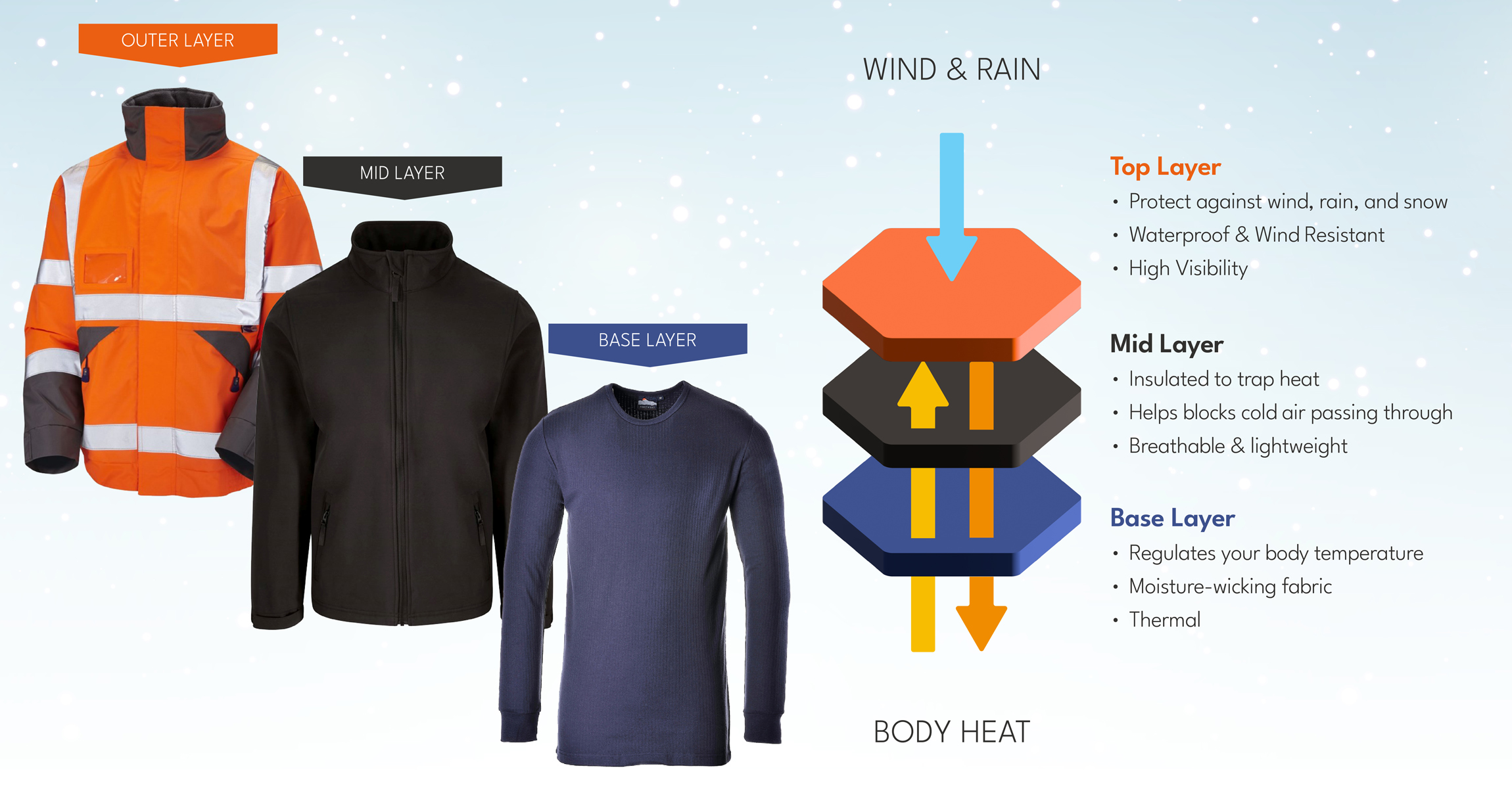
A practical layering approach can help employees adapt to changing temperatures throughout the day:
- Base layers: Help manage moisture and provide a comfortable foundation.
- Mid-layers: Offer insulation and can be adjusted depending on activity levels.
- Outer layers: Provide protection against wind, rain and other environmental conditions.
Gloves, head protection and suitable footwear should also be selected according to the hazards of the task, not simply the outdoor temperature.
For example, gloves that provide warmth but restrict grip or dexterity may be unsuitable for certain tasks. Similarly, bulky clothing that interferes with a safety harness or other PPE could introduce additional risks.
Employers should also consider access to warm rest areas, suitable welfare facilities and opportunities for employees to recover from prolonged cold exposure.
And remember, different people experience temperatures differently. What feels comfortable to one person might be far too cold for another.
Comfort isn’t a luxury. It’s an important part of helping people work safely, effectively and confidently.
3. Winter fatigue: Recognising when your workforce needs a break
Early starts, darker evenings and demanding working schedules can make winter feel exhausting.
While fatigue can occur at any time of year, seasonal changes may add to the challenges employees already face.
For someone working at height, operating machinery, driving between sites or handling heavy equipment, reduced alertness can have serious consequences.
Fatigue can affect attention, reaction times and decision-making, making it an important consideration in workplace risk management.
Why rest and recovery matter
According to the HSE, an estimated 40.1 million working days were lost to work-related ill health and workplace injuries during 2024/25.
Although fatigue isn’t responsible for all these absences, the figure demonstrates the wider impact that workplace health challenges can have on both employees and businesses.
Supporting employees to manage fatigue is therefore an important part of creating a safer working environment.
Practical steps to support your team
Employers can help by reviewing working patterns, ensuring employees receive appropriate rest breaks and identifying tasks where tiredness may increase risk.
Consider whether particularly demanding activities can be scheduled during periods when employees are likely to be more alert, especially for those working long shifts or irregular hours.
Adequate lighting, suitable temperatures and comfortable rest facilities can also help support employees throughout the working day.
And don’t forget hydration.
It’s easy to associate dehydration with hot summer days, but maintaining adequate fluid intake remains important during winter, particularly for employees carrying out physically demanding tasks or working in heated environments.
Providing accessible drinking water, suitable welfare facilities and opportunities for regular breaks can help employees maintain healthy routines throughout the colder months.
Most importantly, encourage open conversations about fatigue and workload.
Sometimes, the most effective safety measure is recognising when someone needs time to rest and recover.
4. Seasonal illness: Small habits that make a difference
Winter often brings an increase in respiratory illnesses, including colds and flu.
In busy workplaces, shared equipment, communal spaces and regular contact between colleagues can create opportunities for infections to spread.
And when employees feel pressured to attend work while unwell, it can create additional challenges for both individuals and their teams.
Did you know?
Research from the Department for Work and Pensions’ Employer Survey 2024 found that:
24% of UK employers identified seasonal illnesses, such as colds and flu, as a health and wellbeing issue they were seeking to address.
In fact, seasonal illnesses were the most commonly identified health and wellbeing issue among employers surveyed.
It’s a useful reminder that winter wellness isn’t simply about the conditions employees work in, but also the everyday facilities and support available to them.
Creating healthier shared spaces
A few straightforward measures can help reduce the spread of seasonal illnesses:
- Maintain appropriate cleaning routines, particularly around frequently touched surfaces.
- Provide accessible handwashing facilities and suitable hygiene products.
- Ensure indoor spaces have appropriate ventilation.
- Encourage employees to follow workplace sickness policies and avoid attending work when unwell.
- Keep communal areas, welfare facilities and shared equipment clean and well maintained.
For organisations managing multiple locations, consistency is particularly important.
Having reliable access to cleaning, hygiene and welfare supplies can help teams maintain appropriate standards across different sites.
A healthier workplace starts with the small things we do consistently, every day.
5. Winter safety: The everyday hazards we shouldn’t ignore
While we’re focusing on wider workplace wellbeing, we can’t overlook the physical hazards that winter can introduce.
From icy walkways and wet entrances to thick fog, heavy rainfall and unpredictable weather conditions, winter can introduce a range of everyday hazards that are easy to underestimate.
And the latest HSE figures show just how significant everyday workplace accidents remain.
30% of reported non-fatal injuries involve slips, trips or falls
According to HSE statistics for 2024/25, slips, trips and falls on the same level accounted for 30% of employer-reported non-fatal injuries to employees under RIDDOR.
These figures cover the whole year and aren’t specific to winter. However, wet weather, ice and reduced daylight can introduce additional slip and trip hazards that need to be managed.
For businesses operating across multiple sites, these risks can be particularly challenging to manage consistently.
When the weather changes, so do the risks
Winter weather isn’t always predictable.
One morning might bring clear skies and crisp temperatures, while the next could mean thick fog, heavy rainfall, icy roads or even snow.
These changing conditions can introduce additional challenges for employees throughout the working day, particularly those working outdoors, travelling between sites or operating vehicles and machinery.
Fog and reduced visibility are particularly important considerations during the darker months. Poor visibility can make it harder for drivers, pedestrians and machinery operators to identify potential hazards, especially in busy yards, loading areas, construction sites and other environments where people and vehicles operate alongside one another.
Heavy rainfall can create slippery surfaces and standing water, while frost and ice can make even familiar walkways hazardous. Strong winds can also affect outdoor activities, particularly when working at height, handling materials or using access equipment.
And it’s not just about the weather itself.
Sudden changes in conditions can mean that working arrangements which were suitable earlier in the day may need to be reviewed.
Staying prepared for changing conditions
A few practical precautions can help organisations manage weather-related risks:
- Monitor changing conditions: Keep an eye on weather forecasts and warnings, particularly when planning outdoor activities or journeys between sites.
- Prioritise visibility: Ensure appropriate high-visibility clothing, lighting and vehicle safety measures are in place where required, particularly during foggy conditions or periods of reduced daylight.
- Keep routes safe: Regularly inspect pedestrian areas, access routes and loading bays for standing water, ice and other potential hazards.
- Review outdoor activities: Consider whether strong winds, poor visibility or icy conditions could affect the safe completion of planned tasks and postpone or adjust activities where necessary.
- Prepare vehicles and equipment: Check that lighting, tyres, wipers and other essential safety features are suitable for the conditions, particularly for employees who regularly travel between locations.
For organisations managing multiple sites, having clear procedures and the right equipment readily available can make a real difference when weather conditions change unexpectedly.
After all, being winter-ready isn’t just about preparing for the cold. It’s about making sure your people can work safely, whatever the weather brings.
Prevention starts before someone gets hurt
Beyond preparing for changing weather, regular inspections, appropriate cleaning procedures and prompt reporting of hazards all play an important role in maintaining safer workplaces.
Consider whether your workplace has:
- Suitable entrance matting to help control water and dirt.
- Appropriate footwear for the working environment and assessed slip risks.
- Clear, well-maintained pedestrian routes.
- Adequate lighting around entrances, walkways and outdoor working areas.
- Suitable spill-response equipment and cleaning procedures.
- Effective systems for reporting and addressing hazards.
It’s also worth reviewing how quickly hazards are identified and resolved, particularly in high-traffic areas where conditions can change throughout the day.
For multi-site organisations, having consistent safety procedures and access to essential workplace supplies can help simplify the management of these risks.
The aim isn’t simply to respond to accidents. It’s to identify and address hazards before they lead to an injury.
6. One size doesn’t fit all: Making winter wellness inclusive
Every workforce is different.
Employees have different body shapes, working responsibilities, physical capabilities and individual needs.
Yet winter workwear is sometimes approached with a simple assumption: provide everyone with a jacket, and the job is done.
In reality, poorly fitting clothing can affect comfort, movement and the effectiveness of other protective equipment.
A jacket that’s too bulky might restrict movement. Gloves that are too large can make detailed tasks more difficult. And garments that don’t accommodate different body shapes can leave employees feeling uncomfortable or inadequately protected.
Why individual needs matter
A Department for Work and Pensions survey of employees and self-employed workers, conducted during 2024/25, found that 32% of workers reported having a long-term health condition.
Among those with a long-term condition, 65% said it affected their ability to carry out everyday activities.
These findings aren’t specific to winter or PPE, but they reinforce an important message: employee needs are varied, and workplace arrangements should recognise those differences.
Building a more inclusive approach
Employers should consider providing appropriate choices in sizing, fit and garment design, while ensuring all protective equipment remains suitable for the hazards involved.
This might include:
- Offering workwear designed for different body shapes.
- Providing a suitable range of sizes rather than relying on generic fits.
- Checking compatibility between layers and other PPE.
- Considering how garments affect mobility, dexterity and comfort.
- Involving employees in the selection and evaluation of workwear.
At Stronghold Global, our Symmetry Within Safety approach reflects our commitment to encouraging more inclusive workplace protection.
By recognising the importance of properly fitting PPE and workwear, organisations can help employees feel more comfortable, confident and supported.
Because workplace safety should work for everyone, whatever the season.
7. Building a culture of wellbeing, not just a winter checklist
With so many things to consider, it’s easy for winter preparation to become another checklist.
Check the heating. Order the jackets. Stock up on cleaning supplies. Review the gritting arrangements.
All important tasks, of course.
But genuine workplace wellbeing goes beyond preparing equipment and facilities.
It’s about creating an environment where people feel listened to, supported and equipped to carry out their work.
That means making wellbeing part of everyday conversations rather than something that’s only discussed when a problem arises.
Think about the bigger picture
For employers, a proactive approach might include:
- Listening to employees: Understanding what makes their working day more difficult during winter.
- Reviewing working conditions: Identifying areas where lighting, temperature, weather exposure or welfare facilities could be improved.
- Encouraging healthy routines: Supporting appropriate breaks, hydration and opportunities to rest.
- Providing suitable equipment: Ensuring workwear and PPE meet individual needs and workplace requirements.
- Maintaining consistency: Making sure employees across different sites receive appropriate levels of protection and support.
These actions don’t have to happen all at once.
Sometimes, a few well-considered improvements can make a meaningful difference to employees’ everyday experiences.
And while winter provides a useful opportunity to review workplace wellbeing, the benefits of getting these things right can extend throughout the year.
Supporting your people, whatever the weather
Winter wellness isn’t about eliminating every seasonal challenge.
It’s about recognising the impact that working conditions, physical comfort and mental wellbeing can have on the people who keep your organisation moving.
From helping employees stay warm and comfortable to maintaining safer working environments, preparing for changing weather and supporting individual needs, there’s a lot organisations can do to make winter working more manageable.
At Stronghold Global, we’re here to help you take a more joined-up approach.
Through our integrated Supply, Services and Technology solutions, we support organisations with the products, practical services and digital tools needed to manage workplace requirements across multiple locations.
Whether it’s winter-ready workwear, correctly fitting PPE, cleaning and hygiene essentials or workplace safety and welfare supplies, we can help you find solutions that work for your people and operations.
Because protecting your workforce isn’t just about preparing for colder weather.
It’s about creating a workplace where everyone feels safe, comfortable and supported – every single day.
Ready to make workplace wellbeing a priority this winter?
Explore our extensive range of workwear, PPE and winter essentials or speak to the Stronghold Global team to discover how we can support your organisation.
📞 01793 484237
✉️ sales@strongholdglobal.com
🌐 www.strongholdglobal.com
Follow us for practical workplace safety advice and the latest updates on compliance standards.
